
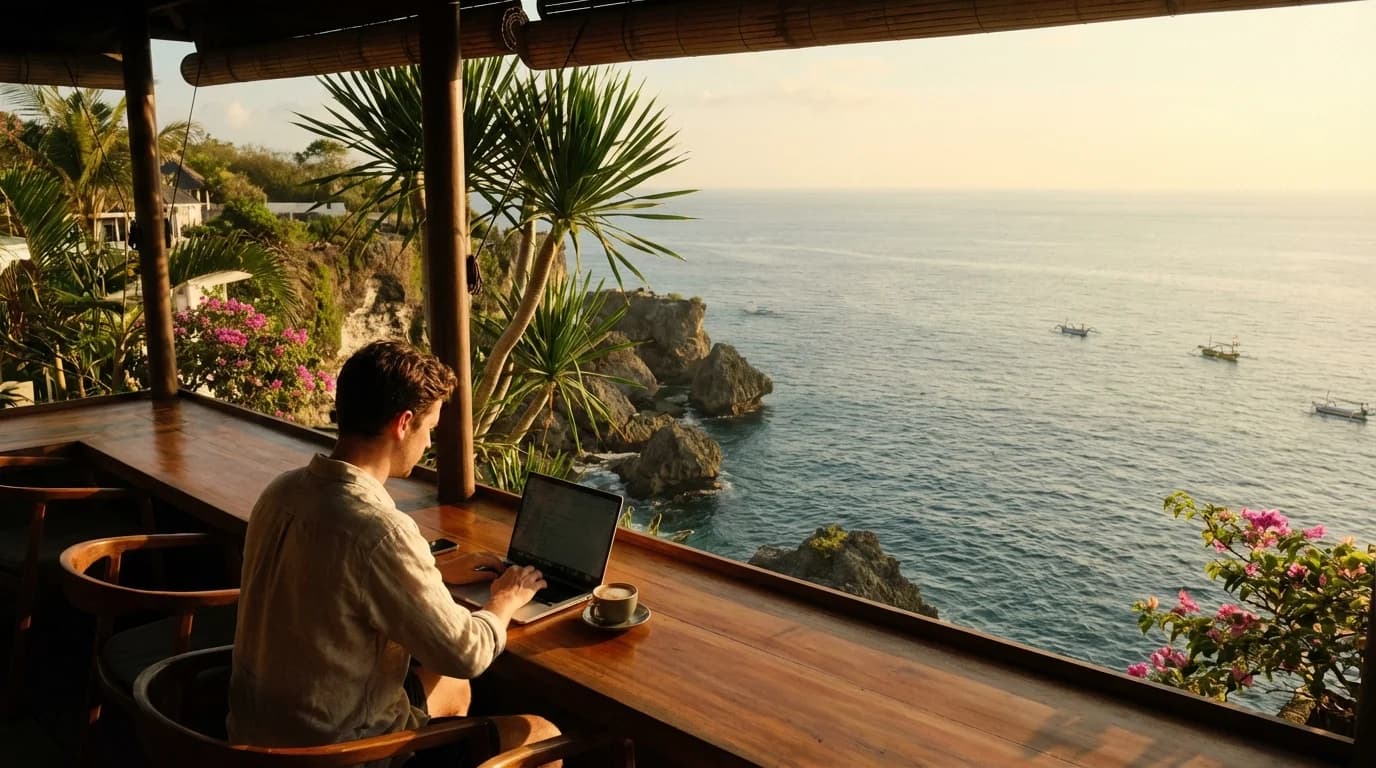
Indonesia wants remote workers to stay longer. The Digital Nomad Visa is their answer. It gives you legal status to live and work remotely from Bali without the paperwork headaches of older visa categories.
Here is everything you need to know before you apply.
What Is the Digital Nomad Visa?
The Digital Nomad Visa (also called the E33G visa) is a special category for remote workers who earn their income from outside Indonesia. You can live in Bali, work for your overseas clients or employer, and stay for up to 5 years with renewals.
Key features:
- Valid for 1 year, renewable up to 5 years total
- No Indonesian income tax on foreign-sourced income
- Work legally from anywhere in Indonesia
- Bring your spouse and dependents on dependent visas
Who Qualifies?
The requirements are straightforward.
You must earn income from outside Indonesia. Freelancers, remote employees, and business owners all qualify as long as the money comes from foreign clients or employers. You cannot use this visa to work for an Indonesian company.
You need proof of income. The minimum threshold is approximately $2,000 per month (or equivalent annual earnings). You will need bank statements, employment contracts, or invoices to prove this.
You need health insurance. Coverage must be valid in Indonesia for the duration of your stay. International policies from SafetyWing, World Nomads, or Cigna Global all work.
You need a clean criminal record. A police clearance from your home country is required as part of the application.

How to Apply
The application process has two stages.
Stage 1: Online application. Submit your documents through Indonesia's immigration portal. This includes your passport, proof of income, insurance, and criminal background check. Processing takes 2 to 4 weeks.
Stage 2: In-country activation. Once approved, you travel to Indonesia on your visa approval letter. Visit a local immigration office to complete biometrics and receive your stay permit (ITAS).
Most founders use a visa agent to handle the paperwork. A good agent costs $300 to $500 and saves you hours of navigating the bureaucracy.
How It Compares to the B211A Visa
The B211A Social/Business Visa has been the default choice for remote workers in Bali. Here is how the two compare.
| Digital Nomad Visa | B211A Visa | |
|---|---|---|
| Duration | 1 year (renewable to 5) | 60 days (extendable to 180) |
| Tax status | No Indonesian tax on foreign income | Gray area |
| Work authorization | Explicit permission to work remotely | Technically for social/business visits |
| Cost | $500-800 total | $250-350 total |
| Processing time | 2-4 weeks | 3-7 days |
| Best for | Long-term stays (6+ months) | Short-term visits or trial periods |
If you plan to stay less than 6 months, the B211A is simpler and cheaper. If you plan to stay longer, the Digital Nomad Visa gives you more stability and legal clarity.
Common Mistakes to Avoid
Do not overstay your visa. Indonesia takes immigration seriously. Overstaying results in daily fines and potential deportation. Set calendar reminders for your visa expiry date.
Do not work for Indonesian clients on this visa. The Digital Nomad Visa covers foreign-sourced income only. If you take on local clients, you need a different visa and work permit.
Do not skip health insurance. It is a requirement, and Bali's healthcare system works best when you have coverage that includes medical evacuation to Singapore or Australia for serious issues.
What to Do After You Arrive
Getting your visa is step one. Getting set up is step two.
Find your workspace and neighborhood. Canggu is the startup hub. Ubud is the focus zone. Uluwatu is the hidden gem. Try each area for a few days before you commit to a long-term rental.
Connect with the founder community. Your visa gives you legal status. Your community gives you momentum. Silicon Bali connects you with founders, runs weekly events, and helps you skip the trial-and-error phase of settling in.

The visa is the easy part. Building something meaningful is the real adventure.